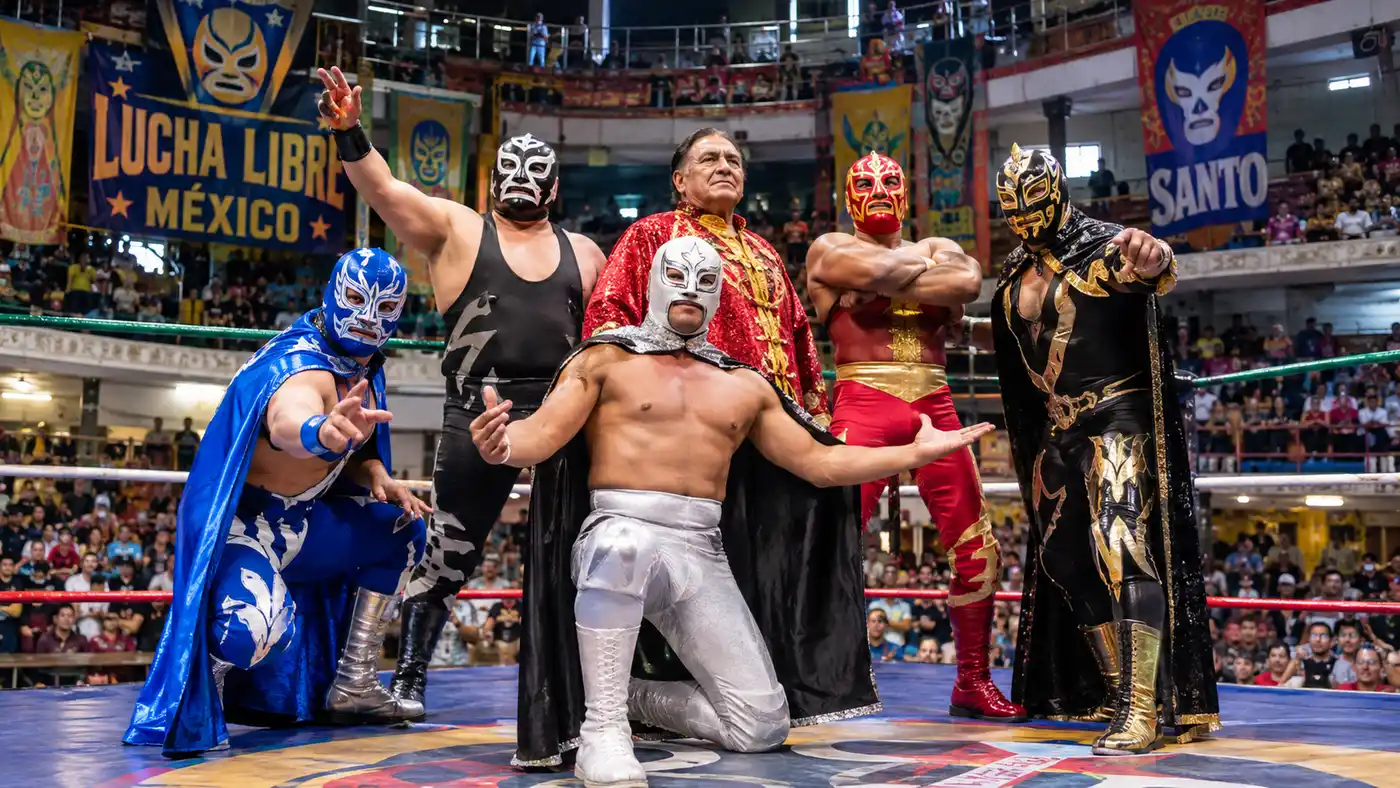
Famous Luchadores and Legends of Mexican Wrestling
My first night at Arena México smelled like stale Corona, lime juice, and scorched chiles from the street carts outside. I had paid roughly 280 pesos for a lower-tier ticket from a woman with gold-capped teeth, totally unprepared for the noise that was about to hit my ears. Within ten minutes, a man in a silver cape leaped backward off the top turnbuckle into the front row, nearly crushing an elderly vendor selling spiced fava beans. That was my introduction to the world of famous mexican wrestlers, and I have spent the last decade tracking down matches in municipal gyms, sticky auditoriums, and dusty neighborhood arenas across Mexico.
Lucha libre is not simply Mexican professional wrestling with smaller men and high-flying acrobatics. It is a genuine working-class mythology, codified over ninety years into a dense social theater of good against evil. The performers inside those vibrant rings carry an almost religious burden. To wear a mask in public without revealing your true identity requires a level of lifelong commitment that most Western athletes could never fathom. If you want to understand Mexican culture, you have to look closely at these masked figures who became folk heroes, cinematic icons, and national saints.
Book your lucha libre mexico city experience:
The Holy Trinity: El Santo, Blue Demon, and Mil Máscaras
You cannot talk about legends of lucha libre without starting with Rodolfo Guzmán Huerta. In 1942, after wrestling under forgettable names like Rudy Guzmán and El Hombre Rojo, he pulled on a plain silver mask fashioned from pigskin and took the moniker El Santo. It changed Mexican pop culture forever. Santo was not just a famous luchador; he was an unstoppable force of righteousness. Over a four-decade career, he headlined 52 feature films where he fought Dracula, the Wolfman, Martian invaders, and mad scientists, always appearing on screen in his silver mask, a suit jacket, and leather gloves.
He was so committed to his secret identity that he wore the mask everywhere. He had a custom slit cut into it so he could eat soup at restaurants, and he traveled on separate flights from his wrestling crew so immigration officers would not see his unmasked face near them. He only unmasked once, partially, on a live broadcast of the talk show Contrapunto in late January 1984. He pulled up the chin of his mask just enough to reveal the face of an aging grandfather. Ten days later, he died of a heart attack. In accordance with his wishes, he was buried wearing the silver mask.
Then came Blue Demon. Alejandro Muñoz Moreno was Santo's greatest foil and eternal frenemy. If Santo was the shining angel of the working poor, Blue Demon was the blue-collar pragmatist. Their real-life rivalry was genuine and bitter, stemming from a historic 1953 match where Demon defeated Santo in straight falls at Arena Coliseo. They made movies together, yet they rarely socialized off-camera. Demon possessed a crisp, punishing mat style that earned him respect from fans who thought Santo was a bit too theatrical.
The third pillar is Mil Máscaras, the Man of a Thousand Masks. Born in San Luis Potosí, he brought Mexican lucha libre to international television screens, touring Japan and the United States in the late 1960s and 1970s. He never lost his mask, he rarely allowed opponents to defeat him cleanly, and his ego was legendary in locker rooms. Still, his physical presence and dazzling wardrobe of interchangeable hoods opened the door for every latino wrestler who followed him abroad.
Pro tip: Visit the Santo statue located on Calle Gorostiza in the rough-around-the-edges neighborhood of Tepito, his birthplace. Go during daylight hours around 2:00 PM when the street market is packed and vibrant.
| Luchador | Golden Era | Mask Status | Signature Move | Cultural Identity |
|---|---|---|---|---|
| El Santo | 1940s - 1980s | Never lost (buried masked) | La de a Caballo (Camel Clutch) | National saint and superhero |
| Blue Demon | 1950s - 1980s | Never lost | El Candado (Dragon Sleeper) | The thinking man's champion |
| Mil Máscaras | 1960s - 1990s | Never lost | Plancha Suicida (Diving Crossbody) | International ambassador |
| Gory Guerrero | 1940s - 1960s | Unmasked career | Gory Special | Technical innovator and patriarch |
| Rey Mysterio Jr. | 1990s - present | Unmasked in 1999 (remasked) | 619 (Tiger Feint Kick) | Global cruiserweight pioneer |
Old Mexican Wrestlers Who Built the Modern Ring
Modern wrestling fans often forget that long before backflips and diving moonsaults became normal, lucha libre was a grueling, bone-cracking business. Salvador Lutteroth founded Empresa Mexicana de Lucha Libre in 1933, creating a domestic stage that required wrestlers with legit submission skills. One of the toughest men to ever tape his fists was Cavernario Galindo. With jagged teeth, wild hair, and facial scars earned from street brawls, Galindo played the barbarian archetype to perfection. He chewed on raw meat during interviews and choked opponents until they passed out.
Gory Guerrero was the opposite. He was a master technician who invented moves that every modern promotion still relies on today, including the Gory Special and the Camel Clutch, which he passed along to Santo. Guerrero had a terrifying intensity on the canvas. His matches against rivals like Cavernario left rings soaked in blood, establishing the visceral, dramatic tone that set Mexican matches apart from the drier American catch-wrestling shows of that decade.
There was also Ray Mendoza, an ex-boxer from Mexico City whose brutal leg kicks and chops sounded like gunshots echoing off the plaster walls of Arena Coliseo. Mendoza fathered five sons who became Los Villanos, one of the most violent dynasties in lucha history. Watching footage from the 1960s, you realize these old mexican wrestlers were not doing synchronized gymnastics. They were beating the hell out of each other for twenty straight minutes, turning simple armlocks into agonizing public rituals.
Masks began taking on sacred weight during this era. A wrestler without a mask had to rely entirely on facial malice, but masked mexican wrestlers carried ancestral mystique. As explained in this deep dive into the meaning of lucha libre masks, losing your hood in a lucha de apuestas wager match was considered a permanent spiritual defeat that often crushed a performer's earning power for good.
Note: Arena security will confiscate professional cameras with detachable lenses at the turnstiles. If you want photos of the ring, stick to your smartphone or a tiny point-and-shoot pocket camera.
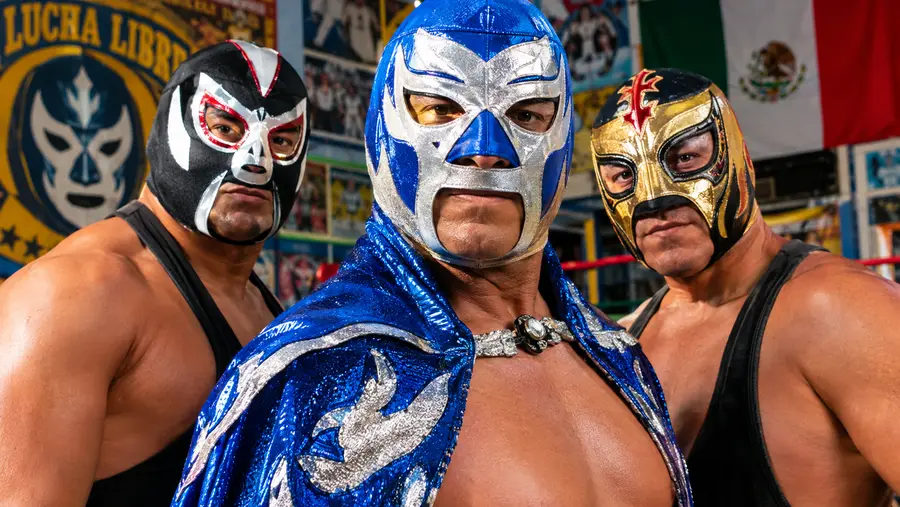
Masked Mexican Wrestlers of the 90s Boom: Rey Mysterio and Beyond
By the early 1990s, lucha libre hit a creative crossroads. The traditional mat style was starting to feel archaic to younger kids in Mexico City and Tijuana. Antonio Peña broke away from CMLL to launch Asistencia Asesoría y Administración, commonly known as AAA, in 1992. Peña embraced neon production, blaring rock music, dwarf performers, and extreme pacing. Out of that borderland melting pot stepped Rey Mysterio Jr.
Mysterio, trained by his uncle Rey Misterio Sr. in a sweltering Tijuana gym, was barely five feet three inches tall. In the United States, promoters would have laughed him out of the building. In Mexico, he became a human cannonball. Watching Mysterio in 1994 was like seeing someone defy gravity for the first time. He flipped off ropes that other men could barely jump over, inventing mid-air counters that left veteran wrestlers looking frozen.
His legendary series of matches with Psicosis, Juventud Guerrera, and Eddie Guerrero transformed how the entire world viewed the lucha libre luchador. When American promotions like WCW signed these athletes in the mid-90s, they put them on national cable television every Monday night. American audiences were stunned. These masked mexican fighters did things that nobody in Atlanta or New York thought was physically possible, moving at three times the speed of heavyweights like Hulk Hogan.
- The Halloween Havoc 1997 classic: Rey Mysterio Jr. put his mask on the line against Eddie Guerrero's Cruiserweight Title in Las Vegas, producing what many critics still consider the most flawless fifteen-minute match in television history.
- The rise of Psicosis: Sporting a horned mask modeled after a nightmare bird, he brought reckless, daredevil balcony dives to audiences that had never witnessed that level of self-sacrifice.
- The legacy of Konnan: Often called the Mexican Hulk Hogan, he bridged the gap between Mexico City arenas and American pay-per-views, helping dozens of younger luchadores land lucrative foreign contracts.
- The unmasking tragedy: WCW management forced several luchadores, including Mysterio and Juventud, to drop their masks for cheap television ratings, an act that Mexican traditionalists viewed as cultural vandalism.
Book your lucha libre mexico city experience:
Technicos vs. Rudos: Famous Mexican Wrestler Archetypes
Lucha libre simplifies the chaos of daily life into two camps. You are either a técnico, fighting with clean skill, chivalry, and high-flying dignity, or you are a rudo, cheating with dirty brawling, pulling masks, using steel chairs, and insulting the referee. When you visit a show at Arena México, the crowd splits down the middle. Families with young kids scream for the técnicos, while taxi drivers and grandmothers in the front row often scream foul obscenities backing the rudos.
El Hijo del Santo carried his father's técnico cross with immaculate grace, but nobody generated pure, joyful hatred like the late Perro Aguayo. Aguayo had a forehead that looked like a dry riverbed, completely crisscrossed with deep trenches from decades of blade cuts. He was a rudo who threw stiff boots to the teeth and tossed chairs into the third row. When his son, El Hijo del Perro Aguayo, launched the heel stable Los Perros del Mal in the 2000s, they turned modern villainy into a cool, rock-and-roll youth movement.
Then you have Atlantis. He has worn the same blue and white oceanic mask since 1983. In Mexico, Atlantis is known as the ultimate mask hunter. While other legends lost their identities as they aged, Atlantis repeatedly put his mask on the line against fellow superstars and won every single time. He unmasked Villano III in 2000 in what remains one of the most emotional bouts in arena history, and repeated the feat against Último Guerrero in 2014.
The contrast between these archetypes is what drives the melodrama. A técnico gives hope that rules and decency can triumph over corrupt systems. A rudo proves that cheating works, at least until the third fall. It is a morality play staged four nights a week inside a twenty-foot ring surrounded by chicken wire.
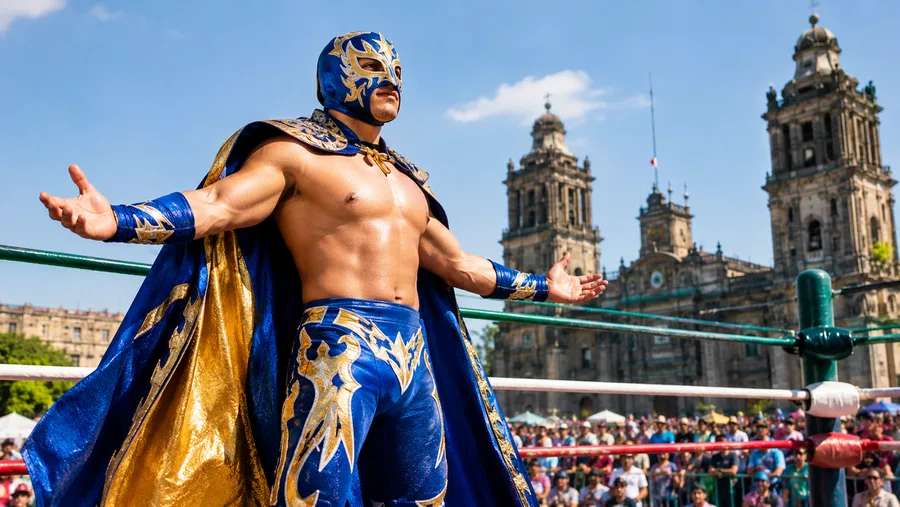
Why Famous Mexican Wrestlers Keep Reinventing the Sport
A sport that relies entirely on nostalgia will eventually die, but lucha libre refuses to wither. The 2000s brought Místico, an athletic prodigy who sparked an unprecedented attendance surge across Mexico City. When Místico made his entrance inside Arena México, bathed in white light with church bells tolling through the sound system, teenagers screamed so loud that the concrete floor vibrated. He proved that a traditional masked Mexican wrestler could still be the most popular athlete in the capital.
Today, the torch has passed to a different breed of luchador mexicano. Brothers Penta El Zero Miedo and Rey Fénix, born in Ecatepec, one of the most dangerous municipalities in the state of Mexico, have conquered worldwide promotions like AEW. Penta's skeletal war paint, catchphrase of Cero Miedo, and brutal arm-snapping submission hold turned him into an international merchandise juggernaut. Fénix, meanwhile, walks along the top ring ropes as if strolling through a city park.
- Dynastic names: Passing a wrestling name to a son or nephew requires a legal blessing or passing a ring test; names prefixed with "Hijo de" indicate direct lineage, while "El Nieto de" marks a grandson.
- The independent circuit: Underground promotions like IWRG in Naucalpan showcase brutal deathmatches that keep regional lucha gritty and dangerous away from corporate television cameras.
- The Luchadoras: Female stars like Marcela, Faby Apache, and Stephanie Vaquer have dismantled the old machismo barriers, headlining major arena cards with stiff, world-class athletic bouts.
- Cross-border influence: Modern luchadores now jump fluidly between Tokyo, London, Chicago, and Guadalajara, ensuring Mexican style remains the spine of modern global wrestling.
Lucha libre names carry heavy lineage. When a wrestler takes up a family name, they inherit twenty or thirty years of fans who loved or hated their predecessor. It creates an unbroken chain of living folklore that sports leagues in other countries simply cannot replicate.
Frequently Asked Questions about famous mexican wrestlers
What are Mexican wrestlers called?
Mexican wrestlers are called luchadores (singular: luchador). If they are female, they are called luchadoras. The sport itself is known as lucha libre, which translates literally to free fighting or freestyle wrestling.
Who is the most famous Mexican wrestler in history?
El Santo (Rodolfo Guzmán Huerta) is universally considered the most famous Mexican wrestler. He became a massive cultural superhero, appearing in dozens of films and comic books while never losing his iconic silver mask.
Why do so many Mexican pro wrestlers wear masks?
Masks trace back to pre-Hispanic Aztec and Mayan warrior traditions, representing spiritual alter egos. In modern lucha libre, the mask is sacred; losing it in a wager match is considered the ultimate professional humiliation.
Do famous luchadores ever reveal their real identities?
Luchadores only reveal their identities if they lose a high-stakes lucha de apuestas (wager match) where they bet their mask against another wrestler's mask or hair. Retired legends often keep their identities secret for life.
Quick Reference
- El Santo was buried wearing his silver mask in 1984
- Rey Mysterio Jr. popularized the cruiserweight style worldwide
- Técnicos are the heroes; Rudos are the villains
- Losing a mask match forces the wrestler to reveal their birth name and hometown
Book your lucha libre mexico city experience:
My Take
If you find yourself in Mexico City on a Tuesday or Friday evening, skip the trendy rooftop bars in Roma Norte for just a few hours. Buy a ticket at the Arena México box office, grab an enormous plastic cup of draught beer, and watch the wrestlers fly. It does not matter whether you follow pro wrestling at home or find the whole concept ridiculous. Once the crowd starts banging the metal barriers and a masked man in emerald spandex hurls himself through the air toward the third row, you will understand why these athletes are worshipped like kings. There is nothing else on earth quite like it.
Read more about lucha libre mexico city.