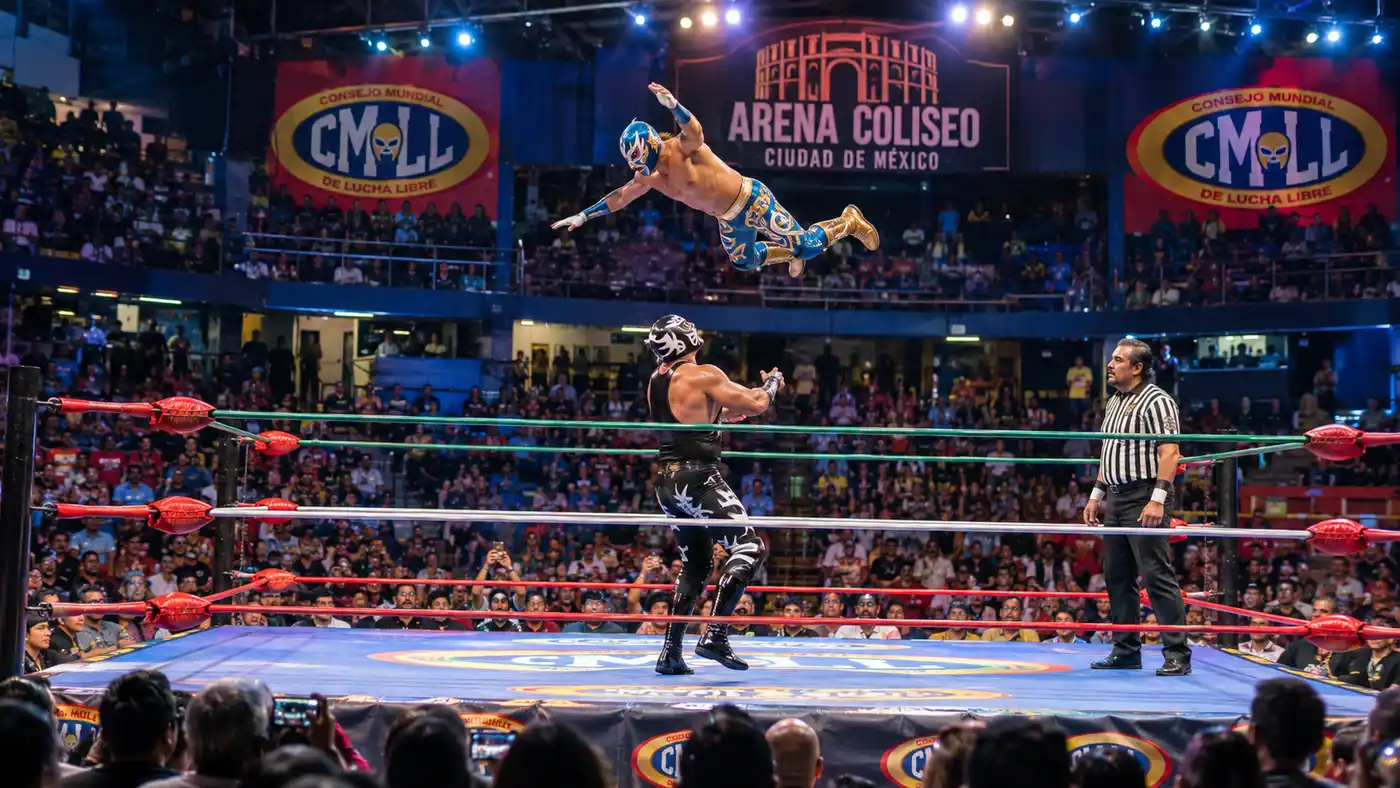
Arena Coliseo Mexico City Guide
You can smell the scorched lard and fried onions half a block before you see the neon marquee. Street carts clutter the sidewalk along Calle República de Perú, their steam hissing into the cool evening air while vendors shout over each other to peddle foam masks and bootleg t-shirts. Tucked between crumbling colonial facades and auto part shops in the gritty belly of Centro, arena coliseo sits like an ancient Roman relic shrunk down and dropped into Mexico City. It does not look like much from the outside. The facade is worn, the paint peels in quiet corners, and the street outside feels raw compared to the polished avenues of Roma or Condesa. Once you step past the heavy iron gates and push through the turnstiles, the outside world vanishes behind a wall of screams and thumping bass.
Most travelers heading south of the border end up at its bigger sibling across town, but this weathered building holds the real soul of Mexican wrestling. It was designed specifically for combat sports, built small enough that you can hear the boots slap against the canvas from the highest wooden bench. If you want a sanitized tourist show with souvenir shops and selfie backdrops, you picked the wrong venue. Going to arena coliseo mexico city is an intense, sweaty ritual that tests your senses, rattles your eardrums, and drops you squarely into one of the oldest neighborhood traditions in the capital.
Book your lucha libre mexico city experience:
The History and Architecture of the Lagunilla Funnel
They call it El Embudo de la Lagunilla, which translates to the Funnel of Lagunilla. The nickname makes total sense the second you find your seat. Built in 1943 by Salvador Lutteroth, the mastermind behind Consejo Mundial de Lucha Libre, the arena came to life after Lutteroth won 40,000 pesos in the national lottery. He took that prize money and bought a chunk of land near the historic center. He wanted a dedicated venue for indoor fighting sports, hiring architect Francisco Bullman to build a circular bowl that pushed spectators as close to the ring as physics allowed.
When it opened on April 2, 1943, it was considered a modern marvel. It was the first indoor sports building in Mexico with built-in air conditioning, though you would never guess that today when five thousand people are shouting in July. Legendary figures wrestled here before the gigantic venues took over. El Santo, Gory Guerrero, and Blue Demon bled on this canvas. For decades, it stood as the supreme temple of boxing and wrestling in the republic. Even today, arena coliseo df maintains an odd, steep layout where the upper tiers hang directly over the ring. The ring is sunken, pulling your gaze straight down into the action.
The neighborhood around it is old Centro Histórico, right on the border of La Lagunilla and a short walk from Tepito. It has never gentrified. You see peeling plaster, vintage iron railings, and concrete ramps worn smooth by eighty years of leather work boots. That patina is precisely why lucha libre enthusiasts revere this place. Unlike newer arenas in mexico city that look like corporate convention halls, this room remembers every drop of sweat spilled inside it since World War II.
Lucha Libre Mexico City Arena Mexico vs Arena Coliseo
First-time visitors always get confused about which building to visit. It is an understandable mistake. Both venues belong to the same promotion, both showcase top-tier talent, and both have deep historical roots. The experience inside them could not be more different.
If you head to the Arena Mexico Visitor Guide, you will see a massive cathedral holding nearly 16,500 people. It has giant video screens, expansive concourses, and a heavy tourist presence on Friday nights. Arena coliseo cdmx is intimate, rough around the edges, and capped at roughly 5,200 spectators. There are no digital screens hanging from the ceiling. When someone flies over the top rope, you hear the sharp snap of their shins hitting the floorboards without audio enhancement. The debate between lucha libre mexico city arena mexico vs arena coliseo usually comes down to whether you prefer theatrical spectacle or raw neighborhood energy.
| Feature | Arena Coliseo | Arena México |
|---|---|---|
| Capacity | 5,200 seats | 16,500 seats |
| Primary Show Night | Saturday evening (7:30 PM) | Tuesday (7:30 PM), Friday (8:30 PM), Sunday (5:00 PM) |
| Neighborhood | Centro Histórico / Lagunilla | Colonia Doctores |
| Sightlines | Very steep, exceptionally close to the ring | Varies widely; high rows sit far from the mat |
| Atmosphere | Local working-class families, raw shouting | Mix of international tourists and die-hard locals |
| Ticket Range | 150 to 450 MXN | 180 to 900+ MXN |
Coliseo hosts fights primarily on Saturday nights. That timing completely changes the crowd dynamic. Fridays at Arena México attract corporate office workers blowing off steam and international tour groups fresh off the double-decker buses. Saturdays at arena coliseo lucha libre belong to the neighborhood. Grandmothers bring plastic bags filled with sliced fruit, kids argue about their favorite rudos while balancing on wooden steps, and mechanics from the surrounding streets unwind with two-liter cups of beer.
Note: The streets surrounding the arena become deserted and sketchy fast once the final bell rings around 10:00 PM. Do not wander north toward Tepito or Lagunilla after the show, even if your phone navigation suggests a scenic shortcut to a distant metro station.
How to Buy Arena Coliseo Tickets and Pick Your Seats
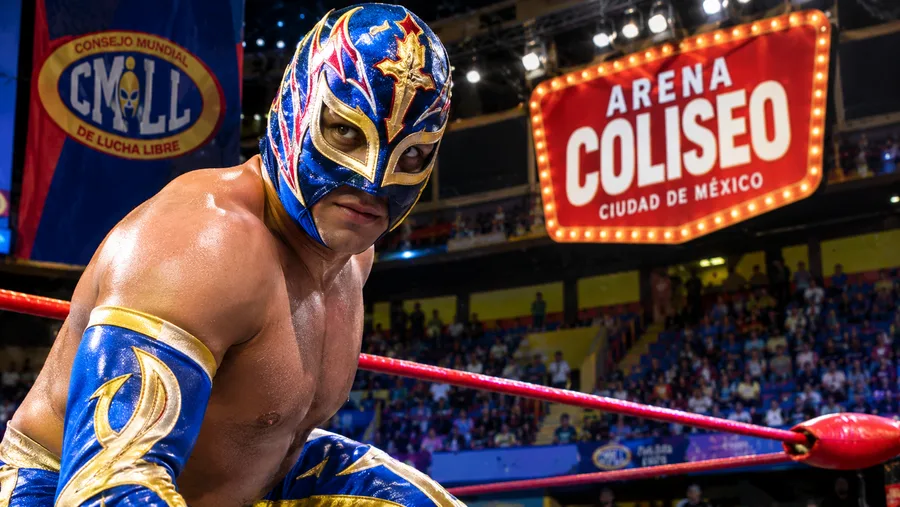
Getting arena coliseo tickets is relatively easy compared to massive soccer matches, but it still requires some planning if you want ringside views. You can buy arena coliseo lucha libre tickets directly through Ticketmaster Mexico, but the platform tacks on hefty convenience fees that can double the cost of cheaper tickets. If you speak a little Spanish or do not mind pointing at a laminated seating chart, buying your tickets at the box office window on fight day is dead simple.
The box office sits right on República de Perú. It opens by 11:00 AM on show days. Cash is king here, so bring crisp bank notes because card readers at the taquilla are notorious for losing connection. If you want complete peace of mind, our detailed overview on buying lucha libre tickets in Mexico City explains how the local ticketing process works step by step.
Pro tip: Aim for Filas 3 to 6 in the Ring Numerado section. You get all the bone-jarring impact of ringside seats without the risk of a 220-pound wrestler landing directly in your lap.
Seating options fall into distinct tiers:
- Ring Numerado: Floor seating surrounding the ring, numbered row by row. Row 1 is thrilling, but wrestlers frequently crash into the barrier and flatten chairs.
- Preferente: The lower concrete tier just above the floor. Excellent height, great panoramic view of aerial dives, and cushioned enough for a two-hour show.
- Balcón: Steep upper rows with basic wooden and concrete benches. The steepest vantage point in Mexico City arenas, cheap, noisy, and packed with rowdy locals shouting relentless insults.
Honestly, there is not a single terrible seat in the building. Because Francisco Bullman designed it like a compact vertical bowl, even the furthest back row in the balcony sits closer to the ring than mid-tier seats in major American arenas. If you pay 350 pesos for a lower-tier ticket, you are sitting closer to the action than someone paying triple that amount at a Friday night show across town.
Book your lucha libre mexico city experience:
Inside the Match: The Saturday Night Ritual
A night of lucha libre cdmx coliseo runs like clockwork. The undercard starts promptly at 7:30 PM with younger talent and mini-estrellas proving their worth. These opening bouts often feature jaw-dropping acrobatics because rookie fighters are desperate to earn a permanent spot on the main CMLL roster. The canvas is tight, producing a hollow, drum-like boom whenever someone takes a back bump.
Vendors squeeze through the narrow aisles with staggering physical balance. You will see guys carrying aluminum trays stacked two feet high with potato chips doused in hot sauce, lime juice, and Maggi seasoning. Others haul stainless steel coolers packed with ice and Corona cans. You can order a michelada served in a plastic cup rimmed with sticky tamarind paste and chili powder. A double beer will run you about 120 to 140 pesos, which feels fair for ringside table service delivered straight to your chair while masked men hit suicide dives three yards away.
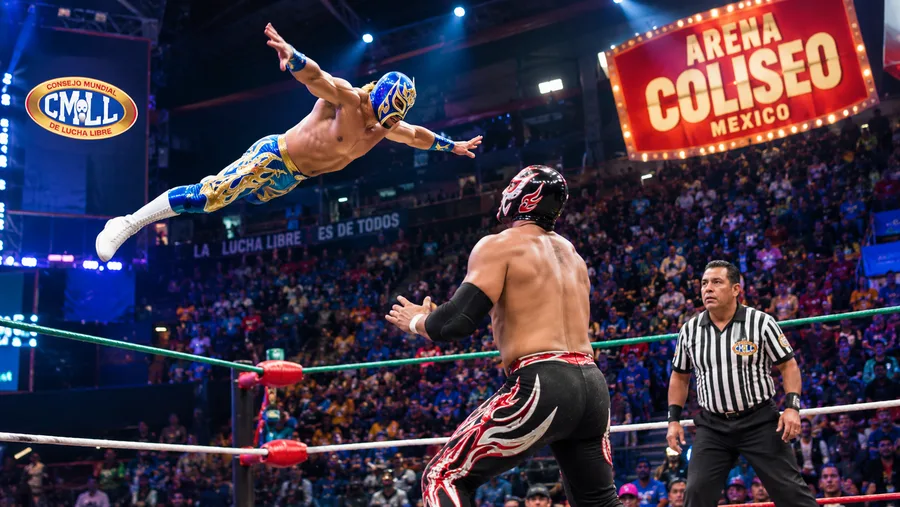
What sets arena coliseo mexico df apart is the volume. The concrete ceiling reflects every insult straight back down to the ring floor. Mexican crowds divide themselves by ring allegiance rather than sports loyalty. You support the técnicos, the virtuous heroes who play by the book, or the rudos, the cheating villains who pull masks and kick opponents between the legs. The banter between the balcony and the floor seats can get vulgar fast. It is theatrical, profane, and entirely communal. Even when someone screams something terrible at a referee, the target usually grins and plays right into the insult.
By the time the main event hits around 9:15 PM, the energy hits a boiling point. The air smells of spilled beer, vapor rub, and sweat. Famous luchadores make their entrance from a tiny corridor under the bleachers, walking right past spectators without the security walls you see in bigger venues. If you stand near the entrance ramp, you might get high-fives from national sporting legends wrapped in metallic spandex.
Neighborhood Realities and Getting Out Safely
We need to talk honestly about the location. Arena coliseo mexico sits in Colonia Centro, but it is not the pristine pedestrian zone around the Zócalo or the Palacio de Bellas Artes. It borders Lagunilla, a commercial barrio that can become tricky after dark. Thousands of tourists attend lucha libre coliseo mexico city every month without incident, but you cannot stroll through the area half-distracted with an iPhone hanging out of your back pocket.
- Arriving by Metro: Take Line 8 or Line B to Metro Garibaldi/Lagunilla, walk east along República de Perú for three blocks, and blend into the crowds. Do this only in daylight before 7:00 PM.
- Arriving by Rideshare: Set your Uber destination directly to "Arena Coliseo." Drivers drop you off directly in front of the gate where police officers manage traffic.
- Leaving the venue: Order your car from your phone while inside the arena during the final match, or walk two blocks south to Eje Central Lázaro Cárdenas where street lights are brighter and taxis are plentiful.
- Cash management: Keep smaller bills (20, 50, and 100 peso notes) in your front pocket for beer and snacks so you do not expose a thick wallet full of cards.
The street immediately outside the doors is heavily patrolled by city police on show nights. Uniformed officers guide spectators, manage the line, and keep the main entrance clear. You are safe on the block itself. The trick is avoiding accidental detours. Do not take narrow side alleys heading north after the matches wrap up. Simply turn toward Eje Central, walk briskly with the crowd, and hop into a registered cab or rideshare vehicle to head back to your hotel.
Frequently Asked Questions about arena coliseo
What day does arena coliseo have lucha libre fights?
Fights take place on Saturday nights starting at 7:30 PM. Unlike Arena México which hosts shows multiple nights each week, Coliseo operates exclusively on Saturdays for CMLL professional wrestling cards.
Can I bring a camera to arena coliseo mexico city lucha libre?
You can bring standard smartphones to take photos and short videos. Professional cameras with detachable lenses, GoPros, tripods, and selfie sticks are confiscated at the security checkpoint at the entrance.
Is arena coliseo safe for solo travelers and families?
Yes. The arena itself is filled with local families, couples, and children. The surrounding neighborhood requires street smarts, so plan your transit ahead of time, avoid walking through dark side streets late at night, and use rideshare apps right at the front gate.
How much do tickets cost for arena coliseo lucha libre?
Box office prices range from 150 pesos for general balcony benches up to around 450 pesos for first-row ringside seats. Buying through Ticketmaster online adds service charges, usually pushing the total to 250 to 600 pesos depending on the tier.
Quick Reference
- Address: República de Perú 77, Centro Histórico, CDMX
- Showtime: Saturdays at 7:30 PM (doors open at 6:30 PM)
- Capacity: 5,200 spectators
- Nearest Metro: Garibaldi / Lagunilla (Lines 8 & B)
- Average ticket price: 250 MXN
Book your lucha libre mexico city experience:
My Take
If you only have one evening in the capital and want pure comfort with an easy Uber pick-up zone, go to Doctores. But if you want to understand why Mexican wrestling became a cultural cornerstone, buy a third-row ticket at arena coliseo méxico df. Grab a cold Victoria, squeeze onto a worn folding chair, and watch a luchador leap backward off the top turnbuckle while five thousand screaming locals lose their minds around you. It is raw, noisy, utterly unpretentious, and easily one of the best Saturday nights in Latin America.
Read more about lucha libre mexico city.