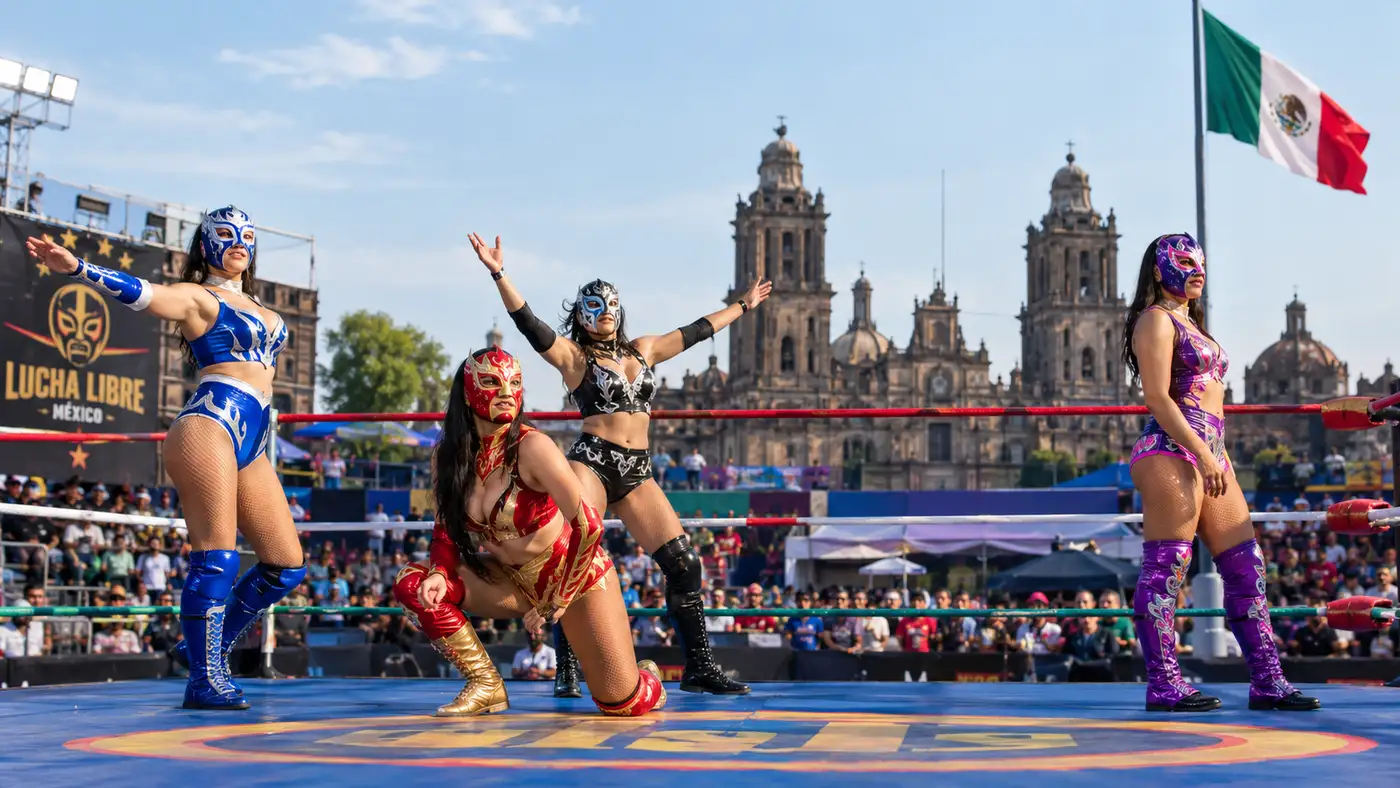
Luchadoras: The Women of Mexican Wrestling
My first night at Arena México smelled of stale Bohemia, fried corn dough, and camphor rub. Down in the ring, a woman wearing a gold-trimmed sequined cape climbed to the third turnbuckle, paused to absorb the screaming insults from the cheap seats, and launched herself into the empty air. The sound of her boots cracking against her opponent's chest resonated through the entire lower bowl. That was my introduction to the modern luchadora, a figure who commands the ring with absolute authority and a distinct, reckless grace that puts on-screen American wrestling to shame.
Female lucha libre is not a side act or a brief novelty break between men's matches. It is a grueling, technically complex discipline with deep underground roots, shaped by decades of institutional hostility, cultural resistance, and genuine ring brutality. Getting a ticket to watch these athletes live reveals an entirely different dimension of Mexico's most theatrical export.
Book your lucha libre mexico city experience:
The 30-Year Ban and the Rise of the Luchadora
For more than three decades, you could not watch women wrestle in Mexico City. The regente of the Federal District, Ernesto Uruchurtu, slapped a citywide ban on female lucha libre in 1954. He deemed it morally degrading, unladylike, and detrimental to Mexican family values. The commission refused to license female athletes, forcing promoters to cut them from the capital's grandest arenas entirely.
The women did not stop. They simply packed their gear bags and took overnight buses to small border towns, dusty regional gyms, and fairground rings across Pachuca, Puebla, and Monterrey. Irma González, widely considered the godmother of the sport, spent years driving thousands of miles across state lines just to earn enough pesos to feed her family. These athletes wrestled on wooden planks covered by thin canvas, often with no doctor in the building, keeping the traditions of Mexican female wrestling alive while municipal politicians in Mexico City pretended they had eliminated the phenomenon.
The ban held until 1986. That was the year promoter Francisco Alonso brought women back to the capital, booking them inside the historic Cathedral of Lucha Libre. The audience went wild. Decades of exile had not softened the style of the fighters. If anything, decades on the road made them meaner, faster, and far more adaptable than their male peers.
Note: Municipal archives from the 1950s framed the citywide ban as an issue of public decorum and feminine dignity, but archival interviews with early wrestlers confirm male sports syndicates actively lobbied city officials to eliminate female competition for lucrative weekend slots.
Iconic Luchadoras Who Shaped Mexican Style Wrestling
The history of Mexican style wrestling female stars is marked by grit and long family lineages. Irma González wrestled for over four decades, often sharing cards with her daughter, Irma Aguilar. When the two won the first national women's tag team championships, the crowd wept openly. Irma was tiny, fast, and threw arm drags with bone-snapping speed.
Lola González took the style international in the 1980s. She worked brutal tours through Japan, bringing back stiff martial arts strikes that changed the rhythm of lucha libre women forever. Japanese promotions favored legitimate contact, and Lola absorbed that philosophy, blending it directly into the tumbling acrobatic style native to Mexican rings. By the time Lady Apache and Marcela arrived in the 1990s, the female division inside Consejo Mundial de Lucha Libre (CMLL) was putting on the most technically demanding bouts in the country.
Marcela alone held the CMLL World Women's Championship five separate times. Her matches against Amapola, an uncompromising ruda villain who fought like a bar brawler, drew thousands of dedicated fans on Tuesday nights when the arena was otherwise quiet.
| Luchadora | Active Eras | Signature Feat | Defining Match Type |
|---|---|---|---|
| Irma González | 1950s - 1990s | Pioneered women's wrestling during the ban | Cabellera (Hair vs Hair) |
| Lola González | 1970s - 2000s | Universal Women's Champion across continents | Technical title defense |
| Marcela | 1990s - Present | 5-time CMLL World Champion | Title defense |
| Amapola | 1990s - Present | Legendary ruda brawler, long title reign | Mascara vs Cabellera |
| Princesa Sugehit | 1990s - Present | Unmasked several fierce rivals in Monterrey | Mascara contra Mascara |
| Jarochita | 2000s - Present | Modern high-flying tag specialist | Mascara contra Mascara |
Masks, Hair, and High Stakes: Las Luchas de Apuestas
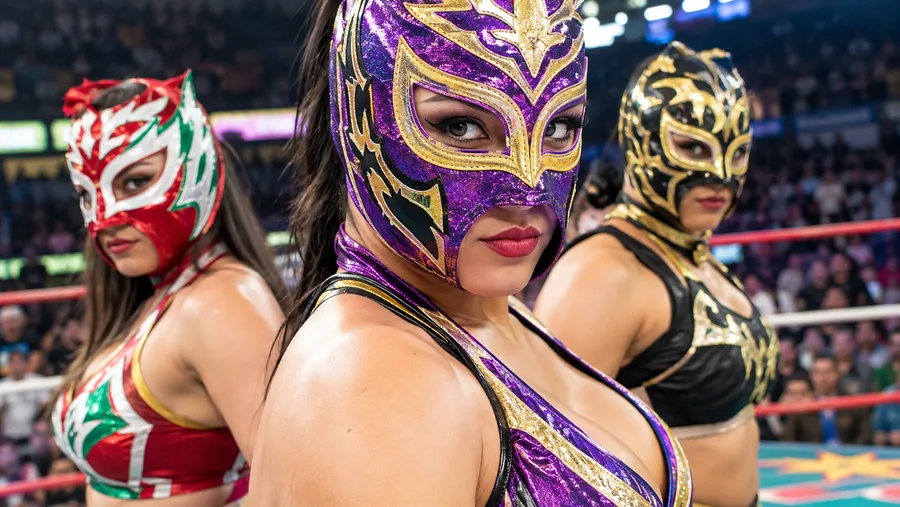
Wrestling masks are sacred objects in Mexico, and this rule applies equally to masked female wrestlers. When a luchadora steps into the ring for a match of apuestas (a wager match), she puts her entire career on the line. It is either mask against mask, or mask against hair.
Losing your mask means standing in the center of the ring, unlacing your identity, revealing your legal name, your age, and your hometown to thousands of people screaming at you. It changes your market value overnight. You can learn more about the deep cultural symbolism behind these hoods in our guide to traditional masks, but seeing a woman lose her mask live is heartbreaking. I saw Princesa Sugehit unmask Zeuxis in 2017 after a 22-minute bloodbath. The arena was so quiet before the final three-count you could hear the sweat hitting the ring apron.
For masked lady wrestlers who lose their masks early in their careers, the hair match becomes their primary wager. If a female luchador has no mask to lose, she wagers her long hair. A barber enters the ring with hand clippers immediately after the bell rings. The loser sits stoically on a folding wooden chair while clumps of black hair fall to the floor. Promoters do not stage this with fake scissors. They shave the head down to the scalp while the opposing wrestler rubs handfuls of hair into the camera lens.
Pro tip: If you see an apuesta match advertised on a poster outside the ticket booth, buy a seat in the first 7 rows immediately. These wager bouts happen only 3 or 4 times a year, and the energy in the arena is electric compared to standard weekly shows.
Book your lucha libre mexico city experience:
What to Expect at a Female Lucha Libre Match Live
Going to see lucha libre female bouts live is different from watching male heavyweights. Male matches frequently pause for extended crowd posturing, comedic referee routines, and elaborate rope bounces. The women tend to work significantly faster, hitting the mat harder and using genuine submission holds known locally as llaveo.
The pacing is relentless. You will see arm bars twisted until the joint visibly pops, top-rope planchas that send both competitors crashing onto the thin floor mats, and vicious face-slaps that leave red handprints across chests. The crowd does not go easy on them, either. Old grandmothers sitting in the front rows will shout horrifying insults at a villainous ruda, calling her everything from a sloppy thief to a bad mother. The wrestler will usually walk over, lean down, and curse right back into the grandmother's face.
- Stiff technical llaveo: female matches lean heavily on traditional Greco-Roman joint locks, arm traps, and neck cranks rather than just running aerial flips.
- Aggressive ring pacing: the athletes usually receive only 12 to 18 minutes on the card, which forces them to pack maximum action into every round without wasted time.
- Brutal aesthetic contrast: competitors wear sparkling, bright outfits, heavy glitter makeup, and intricate masks, contrasting wildly with the bloody cuts and bruised ribs they earn during the fight.
- Intense crowd partisanship: local crowds frequently back female wrestlers with louder vocal chants than the mid-card male matches receive, especially during inter-promotional rivalries.
The dynamic shifts based on the referee. A corrupt referee like Tirantes will openly cheat to help the bad girls win, stomping on the ropes or refusing to count pins. It creates a chaotic, furious atmosphere that gets the whole building shaking.
Where to Catch the Best Mexican Female Wrestling in Mexico City
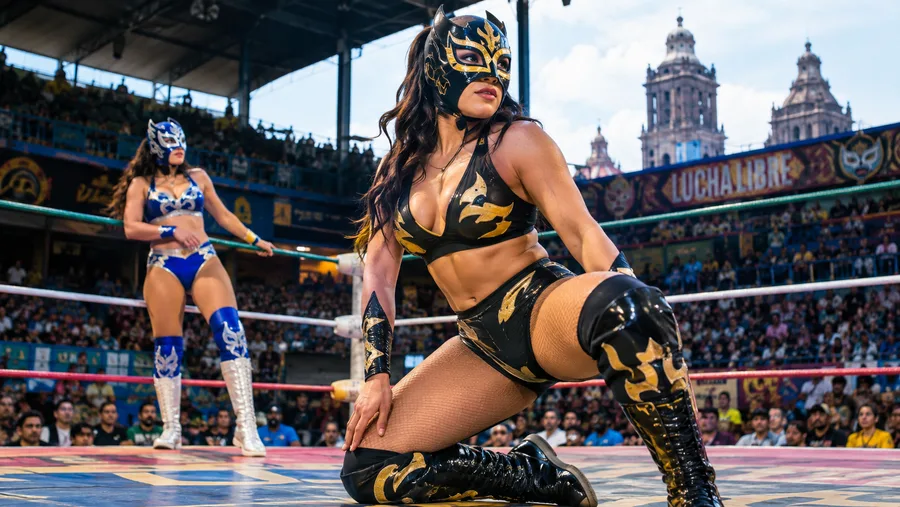
If you want to catch these athletes in their prime element, you need to know where and when to buy your tickets. CMLL runs the best women's roster in the world, staging matches across multiple venues throughout the week. Planning your evening using our complete Arena México visitor guide will save you from confusing ticket counters or getting scalped outside.
The Friday night Spectacular at Arena México in Colonia Doctores is the premier stage. The women usually fight in the second or third match on the card, right around 9:00 PM. Do not show up late, or you will walk into the venue just as their match finishes. Arena Coliseo, located in the historic center on Calle República de Perú, hosts traditional Saturday night events. The Coliseo is smaller, hot, shaped like an old funnel, and smells of grilled chorizo. The sound bounces off the walls, making the impact of every ring bump echo in your teeth.
- Friday nights at Arena México: big arena lights, top-tier production, pristine championship matches, and cold draft beer brought directly to your folding seat.
- Saturday nights at Arena Coliseo: grittier atmosphere, historic 1940s venue, closer sightlines to the canvas, and steep ticket prices starting around 150 pesos.
- Sunday family shows: midday matches at either venue, lower ticket costs, friendlier crowds, and plenty of young girls wearing replica masks cheering their favorite técnica heroes.
- Independent shows at Arena Naucalpan: located outside the city center in the State of Mexico, offering wilder, less regulated wrestling where female wrestlers often mix into hardcore matches with chairs and wooden doors.
Tickets at the box office for ordinary Friday shows range from about 120 pesos up to 600 pesos for ringside leather chairs. Avoid buying from the touts pacing the sidewalk outside the entrance; their tickets are often counterfeit, and the box office line rarely takes longer than 15 minutes if you arrive before 7:30 PM.
Frequently Asked Questions about luchadora
Why were female wrestlers banned in Mexico City for so long?
The Regent of Mexico City banned women from wrestling in the Federal District in 1954 under the pretext of public decency, arguing that athletic violence was inappropriate for women. The ban was upheld by municipal authorities until 1986, when public pressure and changing sports ownership finally reopened capital venues to women.
Do luchadoras wear masks as often as male wrestlers?
Yes, many women begin their careers under masks to protect their identity and build dramatic mystique. While some famous competitors wrestle unmasked to showcase their facial expressions, masked luchadoras guard their identities just as fiercely as their male counterparts, only removing them if defeated in a formal betting match.
Is female lucha libre safe for families and children to watch live?
Live events are very popular with local families, especially Sunday afternoon shows where multi-generational households attend together. The crowd language can be coarse and the physical contact is intense, but the atmosphere inside the major arenas is festive, supervised, and welcoming to travelers with children.
Quick Reference
- Capital ban lasted from 1954 to 1986
- Top arenas: Arena México (Fridays) and Arena Coliseo (Saturdays)
- Match types: Mascara (mask) and Cabellera (hair) wagers
- Average ticket price: 150 to 500 pesos ($8 - $28 USD)
Book your lucha libre mexico city experience:
The Bottom Line
Skipping the women's matches on a lucha libre card is a mistake. The luchadoras of Mexico City have survived political bans, smaller paychecks, and broken bones to build one of the most explosive subcultures in international combat sports. Buy a ticket, grab a cold michelada with chile rimming the plastic cup, and get to your seat early enough to hear the first boots hit the canvas. You will never look at wrestling the same way again.
Read more about lucha libre mexico city.